
STEM in the Wild: How Outdoor Adventures Brings Learning to Life
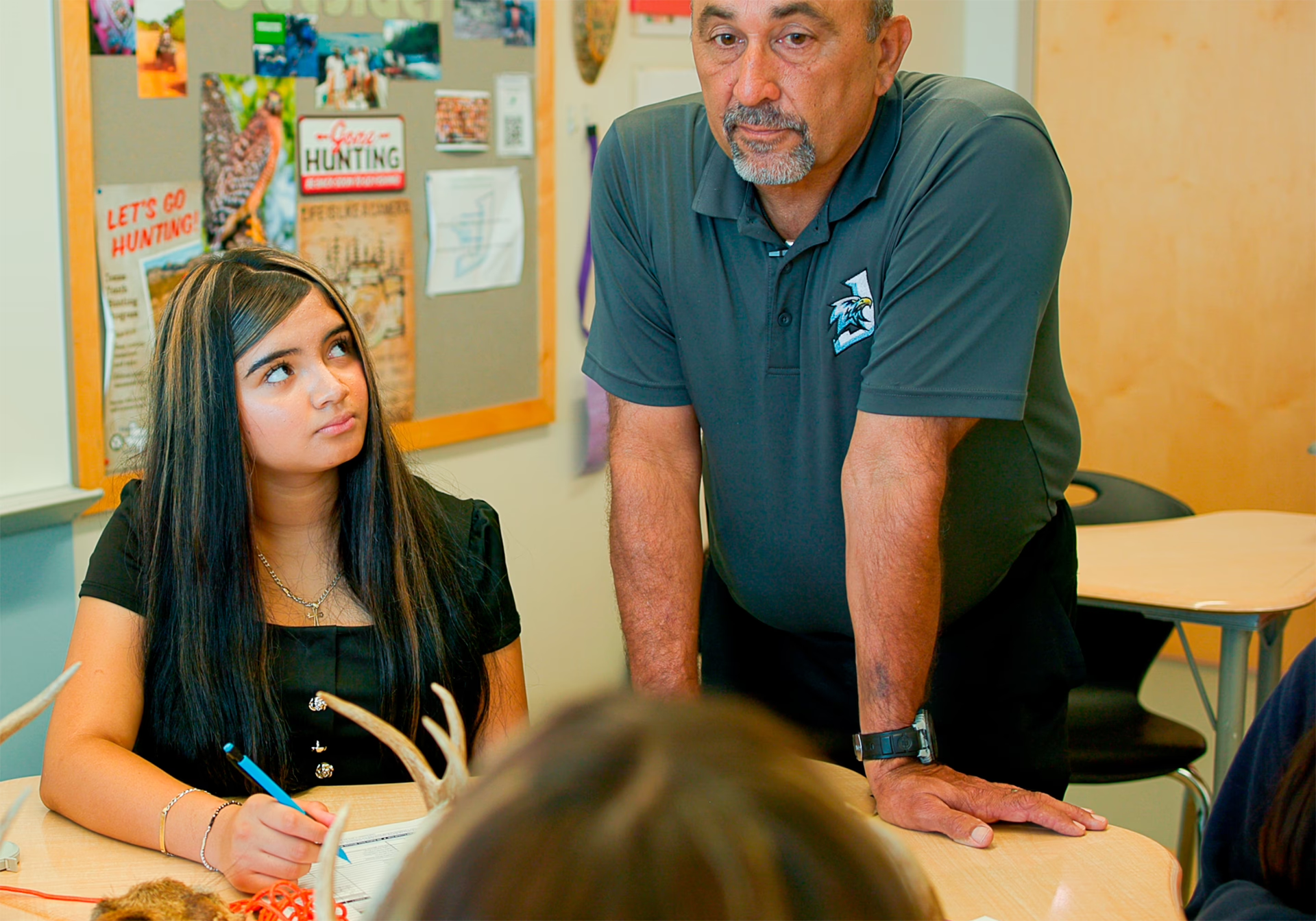
Gone are the days when STEM learning was confined to fluorescent-lit classrooms and textbooks. Today, students are swapping lab coats for hiking boots, testing water samples in local creeks, using GPS devices to navigate trails and analyzing wildlife tracks in real time. Outdoor Adventures (OA) nationally recognized curriculum is bringing science, technology, engineering and math to life in fresh, hands-on ways.
What STEM looks like outdoors
OA transforms abstract lessons into real-world challenges students can see, touch, and solve.
- Science: Students study wildlife biology, test water quality in nearby creeks, and observe how ecosystems function through conservation-based activities.
- Technology: GPS units guide orienteering courses, trail cameras capture wildlife behavior, and digital mapping and weather tools help students plan outdoor excursions.
- Engineering: Hands-on problem solving comes alive through knot tying, archery mechanics, shelter construction, and survival scenarios.
- Math: Measurements, angles, distances, and coordinates gain purpose as students calculate shooting trajectories, navigate terrain, and estimate resources.
Why it sticks
OA’s inquiry-based approach encourages curiosity, collaboration, and critical thinking. Students are not just learning what works. They are discovering why it works. Research consistently shows that hands-on learning improves retention, and OA pairs that engagement with the focus and confidence that come from learning in natural, open spaces.
“By using STEM tools and principles, OA students can help solve real-world conservation issues,” says Freddie Penka, an OA instructor.
STEM in action
For teachers like Lindsay Beaton, a 2024 OTF Teacher of the Year, STEM is woven into everyday outdoor lessons.
- During birding units, students identify species by sound, color, shape, and location
- Binoculars, bird ID books, and the Merlin Bird ID app help students confirm what they observe
- Owl pellet dissections place students in teams, using charts and tools to analyze bone samples and understand food chains
- Technology such as iPads, Chromebooks, telescopes, and field tools supports exploration while keeping learning interactive and student led.
The bigger picture
STEM careers in environmental science, engineering, and technology are growing, yet many students struggle to connect with textbook-based instruction. OA offers an alternative path, especially for learners who thrive through movement, exploration, and hands-on problem solving.
Students do not just learn STEM concepts. They practice them by testing water samples, navigating trails, building functional shelters, and solving real-world challenges tied to conservation and environmental management.
Bottom line:
Outdoor Adventures connects STEM learning to the natural world, helping students build technical skills, confidence, and environmental awareness. The result is deeper understanding, stronger engagement, and a foundation for future careers rooted in curiosity, responsibility, and real-world impact.