
STEM in the Wild:
How Outdoor Adventures Brings Science, Tech and Engineering to Life
Today, students are swapping lab coats for hiking boots, testing water samples in local creeks, using GPS devices to navigate trails and analyzing wildlife tracks in real time. Outdoor Adventures (OA) nationally recognized curriculum is bringing science, technology, engineering and math to life in fresh, hands-on ways.
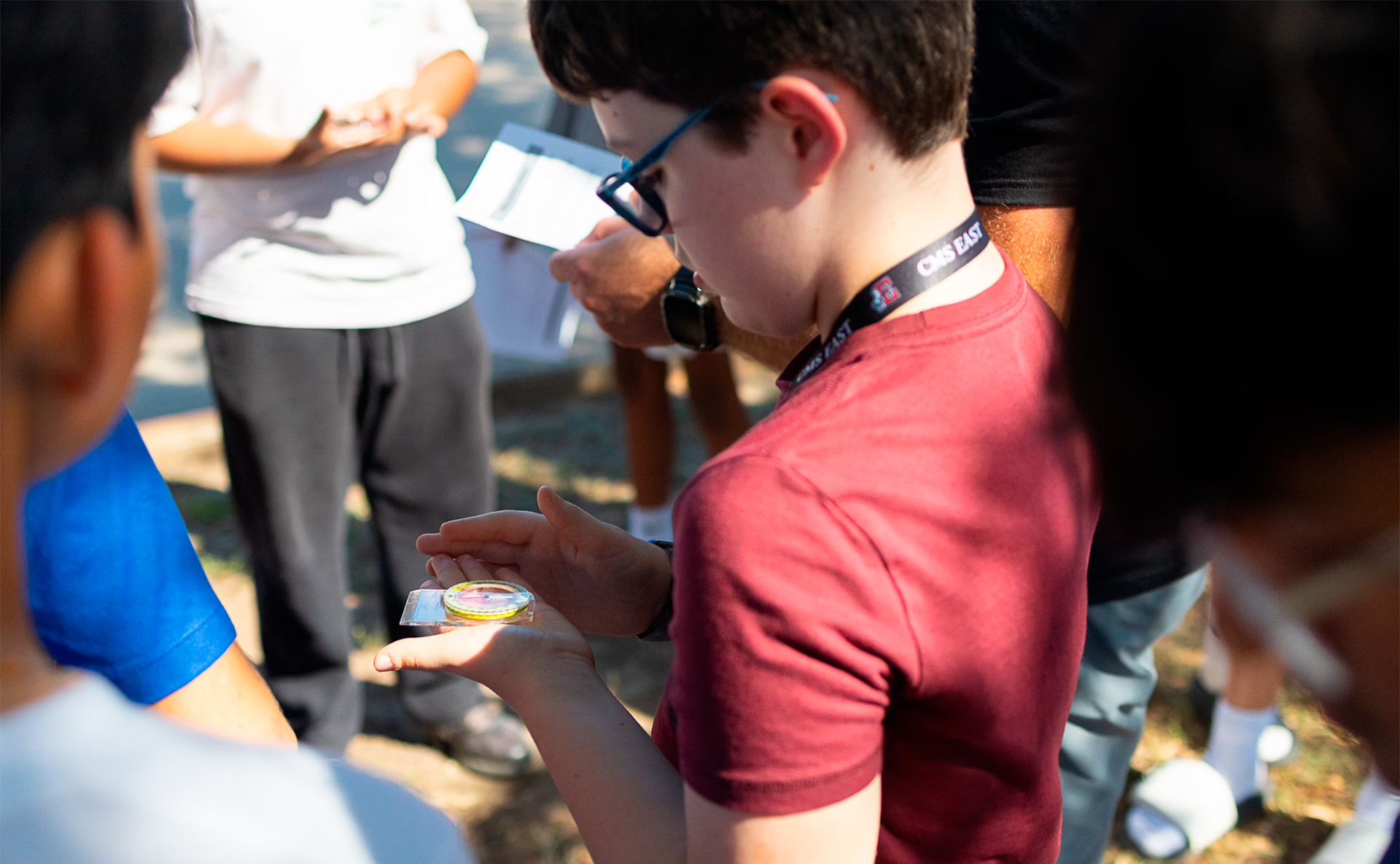
OA transforms traditional STEM instruction into unforgettable, hands-on learning experiences that go far beyond textbooks. In the OA classroom, students explore real-world science by studying wildlife biology, testing water quality in local creeks and learning how ecosystems function through conservation-focused activities. Technology takes center stage as students operate GPS units for orienteering, set up trail cameras for wildlife observation and use digital mapping tools and weather tracking apps to plan outdoor excursions.
Engineering concepts are brought to life through creative problem-solving and outdoor skills like knot tying, archery mechanics, building shelters and tackling survival challenges. Even math finds a fresh purpose, whether students are calculating shooting angles, measuring distances, estimating gear ratios or using coordinates for navigation.
This inquiry-based approach taps into students’ natural curiosity. It encourages exploration, teamwork and critical thinking, all while keeping them engaged in fresh air and open spaces. Research shows that students retain more when they are actively involved in the learning process, and OA delivers exactly that. By experiencing STEM concepts firsthand, students connect classroom lessons with real-world applications, building both knowledge and confidence that sticks.
“By using STEM tools and principles, OA students can help solve real-world conservation issues as well as protect natural resources,” says Freddie Penka, an OA instructor. Penka sees STEM as a natural extension of the work his students do outdoors. He hopes to see OA STEM opportunities grow to include more wildlife studies and hands-on habitat improvement projects, giving students ownership in conservation efforts that matter to their communities.
Lindsay Beaton, a 2024 OTF Teacher of the Year, also integrates STEM deeply into her OA lessons. “When I’m teaching a birding lesson, we learn about bird identification using bird calls, the shape and color of the bird and by location,” she explains. “We use binoculars and a bird ID checklist when we go outside. The students can use binoculars to see the birds, and their bird ID book helps them identify what they’re seeing. We also use the Merlin Bird ID app to identify by bird sounds or with a picture of the bird.”
Her students also explore birds of prey through owl pellet dissections. “The students are placed in teams and given the tools needed to dissect their owl pellet. They then have an ID chart to help sort the bones they find to see what the owl had been eating.”
To support this hands-on learning, Beaton’s class regularly uses binoculars, telescopes, iPads and Chromebooks. For her, STEM in OA is all about creating interactive experiences that bring science and technology to life in meaningful ways.
STEM careers are rapidly growing across fields like environmental science, engineering and technology, yet many students struggle to connect with traditional, textbook-based instruction. OA presents a powerful alternative, offering students immersive, real-world opportunities to engage with science, technology, engineering and math in dynamic, hands-on ways. For those who learn best through movement, exploration and practical application, OA becomes a bridge between academic content and lived experience.
It allows students to discover STEM concepts through hands-on activities, such as testing water samples, navigating trails with GPS, building functional shelters or calculating bow trajectory. These outdoor experiences not only spark curiosity and build core problem-solving and critical thinking skills, but also introduce students to potential career paths in conservation, wildlife biology, outdoor recreation and environmental management. By connecting STEM learning to the natural world, OA cultivates both technical knowledge and a deep appreciation for the environment, laying the foundation for informed, capable and inspired future leaders in STEM.